Navigating the Post-Quantum Shift: Meta's Blueprint for Cryptographic Migration
As the dawn of quantum computing approaches, organizations worldwide face an urgent need to transition their cryptographic systems to withstand future threats. Meta, with billions of daily users, has been at the forefront of this migration, developing a structured approach that balances complexity, security, and operational efficiency. This article distills Meta's lessons and proposes a framework of PQC Migration Levels to help teams of all sizes navigate the post-quantum era.
Why Post-Quantum Cryptography Matters Now
Quantum computers, once fully realized, will be capable of breaking the public-key cryptography that underpins today's digital security—including RSA and ECC. While experts estimate this capability may emerge within 10–15 years, the threat is already present: adversaries can harvest encrypted data today and store it for future decryption, a tactic known as "store now, decrypt later" (SNDL). This means that sensitive communications, intellectual property, and personal data are at risk even before quantum computers arrive.

Recognizing this, standards bodies like the US National Institute of Standards and Technology (NIST) and the UK’s National Cyber Security Centre (NCSC) have set target timeframes—including 2030—for prioritizing post-quantum protections in critical systems. NIST has already published the first post-quantum algorithm standards, such as ML-KEM (Kyber) and ML-DSA (Dilithium), with additional algorithms like HQC on the way. Notably, Meta cryptographers are co-authors of HQC, reflecting the company’s deep commitment to advancing global cryptographic security.
Meta’s Approach: From Risk Assessment to Deployment
Meta’s migration strategy is built on a multi-year, phased process that covers the entire lifecycle of cryptographic change. The goal is to protect user data and internal infrastructure against both current and future threats. The following sections outline the key phases Meta has employed.
1. Risk Assessment and Prioritization
Before any migration, Meta conducted a thorough risk assessment to identify which systems and data were most vulnerable to quantum threats. This included evaluating the sensitivity of data, the lifespan of encryption keys, and the likelihood of SNDL attacks. Systems handling long-term secrets or high-value communications were flagged as high priority.
2. Cryptographic Inventory and Dependency Mapping
One of the biggest challenges in any cryptographic migration is understanding where cryptography is used. Meta built a comprehensive inventory of all cryptographic implementations across its infrastructure—from TLS certificates to internal authentication protocols. This inventory was paired with dependency mapping to reveal how cryptography was woven into systems, services, and third-party integrations.
3. Pilot Deployment and Testing
Rather than a big-bang switchover, Meta adopted a gradual deployment strategy. Early pilots focused on internal tooling and low-risk services to validate algorithm performance, compatibility, and operational overhead. This allowed engineers to refine configurations and troubleshoot issues before scaling.
4. Full Deployment and Monitoring
Once pilots proved successful, Meta expanded post-quantum cryptography (PQC) to more critical systems. Deployment was accompanied by robust monitoring to detect performance regressions, compatibility breaks, and anomalous behavior. Meta also established guardrails —automated checks that prevent non-PQC configurations from being reintroduced inadvertently.
Introducing PQC Migration Levels: A Framework for Complexity Management
Given the diversity of systems within any large organization, a one-size-fits-all migration plan is impractical. Meta has proposed the concept of PQC Migration Levels to help teams assess their readiness and prioritize efforts. These levels scaffold complexity and cost, enabling a tailored approach:
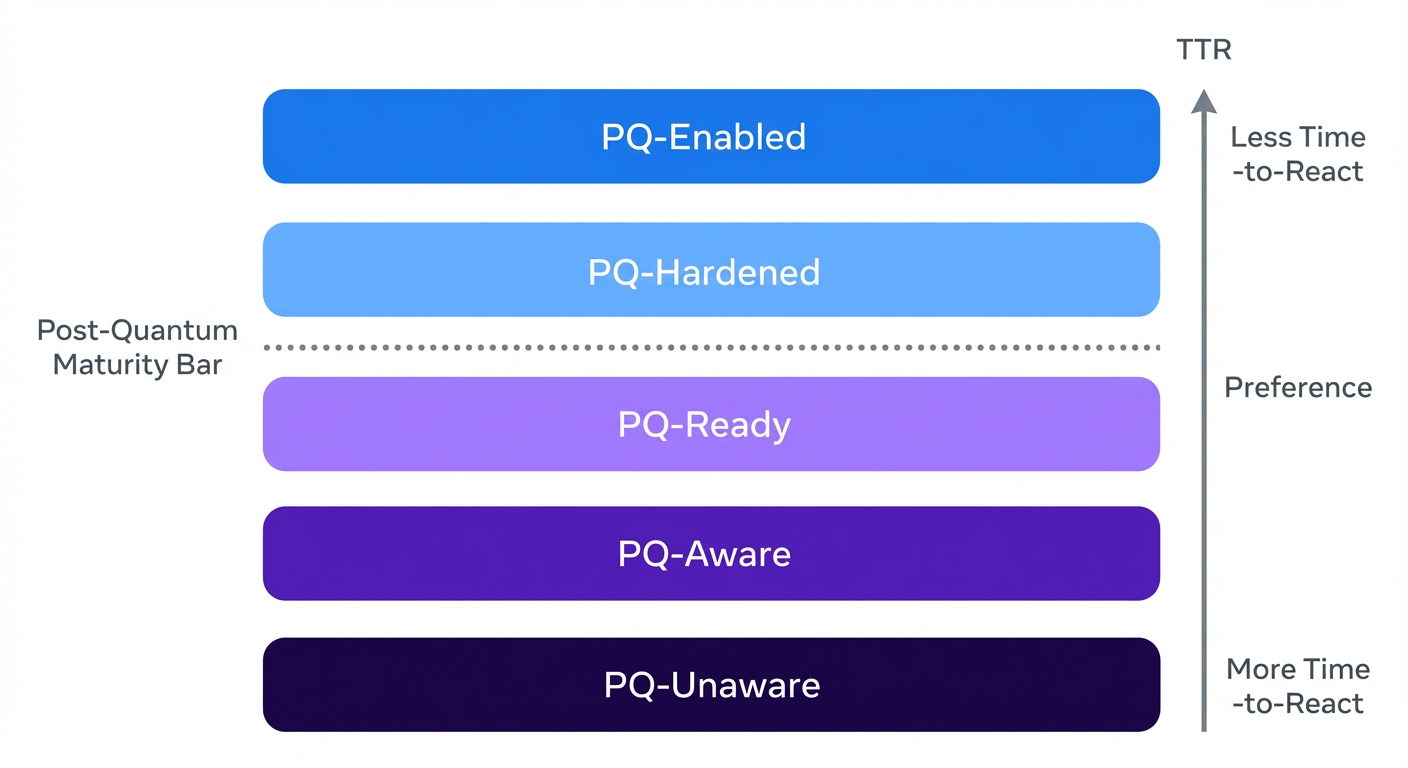
- Level 1: Basic Readiness – Inventory current cryptographic use, identify high-risk systems, and develop a migration roadmap.
- Level 2: Hybrid Cryptography – Deploy hybrid schemes that combine classical and post-quantum algorithms to maintain backward compatibility while adding quantum resistance.
- Level 3: Full PQC – Transition all critical systems to pure post-quantum algorithms as standards mature and ecosystem support stabilizes.
- Level 4: Continuous Evolution – Maintain agility to adopt future algorithm updates and respond to new cryptanalytic advances.
This structured approach prevents teams from becoming overwhelmed and ensures that resources are allocated where they have the most impact.
Lessons Learned: Practical Takeaways for Other Organizations
Meta’s journey has yielded several insights that can benefit the broader community:
- Start early, but start small. Begin with inventory and risk assessment long before quantum computers become a pressing operational concern. Early pilots build confidence and institutional knowledge.
- Embrace hybrid schemes during transition. Hybrid cryptography (e.g., X25519Kyber768) allows organizations to protect data now while retaining compatibility with existing systems. This is especially valuable for protocols like TLS.
- Invest in automation and monitoring. Manual migration is error-prone at scale. Automated tools for cryptographic inventory, configuration management, and compliance checking are essential.
- Engage with standards bodies. Active participation—like Meta’s contribution to HQC—helps shape the future of cryptographic standards and ensures that real-world deployment challenges are addressed.
- Communicate across teams. Cryptographic migration touches every corner of an organization—engineering, security, legal, product, and compliance. Clear communication and shared ownership are critical.
Looking Ahead: Building a Quantum-Resilient Future
The transition to post-quantum cryptography is not a one-time event but an ongoing process. As quantum computing advances and cryptographic standards evolve, organizations must remain vigilant. Meta’s framework of PQC Migration Levels provides a scalable way to manage this complexity, enabling teams to move from assessment to deployment efficiently and economically.
By sharing these experiences, Meta aims to accelerate the entire industry’s journey toward a post-quantum future—one where today's encrypted data remains secure tomorrow, and where organizations of all sizes can navigate the shift with confidence.
Related Articles
- AI Cost Surge Sparks Strategic Shift: New Report Reveals ROI Framework as Key to Growth
- Azure Integrated HSM: Open-Sourcing Hardware Security for Cloud Trust
- The Complex Infection Journey of ClipBanker: A Step-by-Step Breakdown
- Tokenization Drift: The Hidden Pitfall in LLM Prompts and How to Overcome It
- Gremlin Stealer: How It Hides in Resource Files and Steals Your Data
- How to Access Prediction Markets in India Despite Legal Restrictions: A Step-by-Step Guide
- 10 Game-Changing Facts About Micron’s 245TB Data Center SSD
- Hibernate Date Queries Expose Critical Logical Flaw: Expert Recommends Half-Open Intervals