Unraveling Dark Energy: How Cannibal Stars, AI, and the Rubin Observatory Are Changing Cosmology
For decades, dark energy has stood as one of the biggest puzzles in cosmology, driving the accelerated expansion of the universe. Now, a bold new approach is emerging: instead of relying solely on traditional 'standard candles' like Type Ia supernovae, scientists are turning to artificial intelligence and the powerful Rubin Observatory to rethink these cosmic markers. By hunting for 'unknown unknowns'—unexpected phenomena that could hide missing ingredients in our cosmic recipe—researchers hope to finally crack the dark energy code. Below, we explore the key questions behind this revolutionary strategy.
What is dark energy, and why is it such a mystery?
Dark energy is a hypothetical form of energy that permeates all of space and is thought to be responsible for the accelerated expansion of the universe. Discovered in the late 1990s through observations of distant Type Ia supernovae, it makes up about 68% of the universe's total energy density. Despite its dominance, dark energy remains a profound mystery because its nature is completely unknown. It could be a cosmological constant (a property of empty space), a dynamic field like quintessence, or even a sign that our theory of gravity is incomplete. Solving this puzzle is critical for understanding the universe's past, present, and future.
How do Type Ia supernovae act as 'standard candles' for measuring cosmic distances?
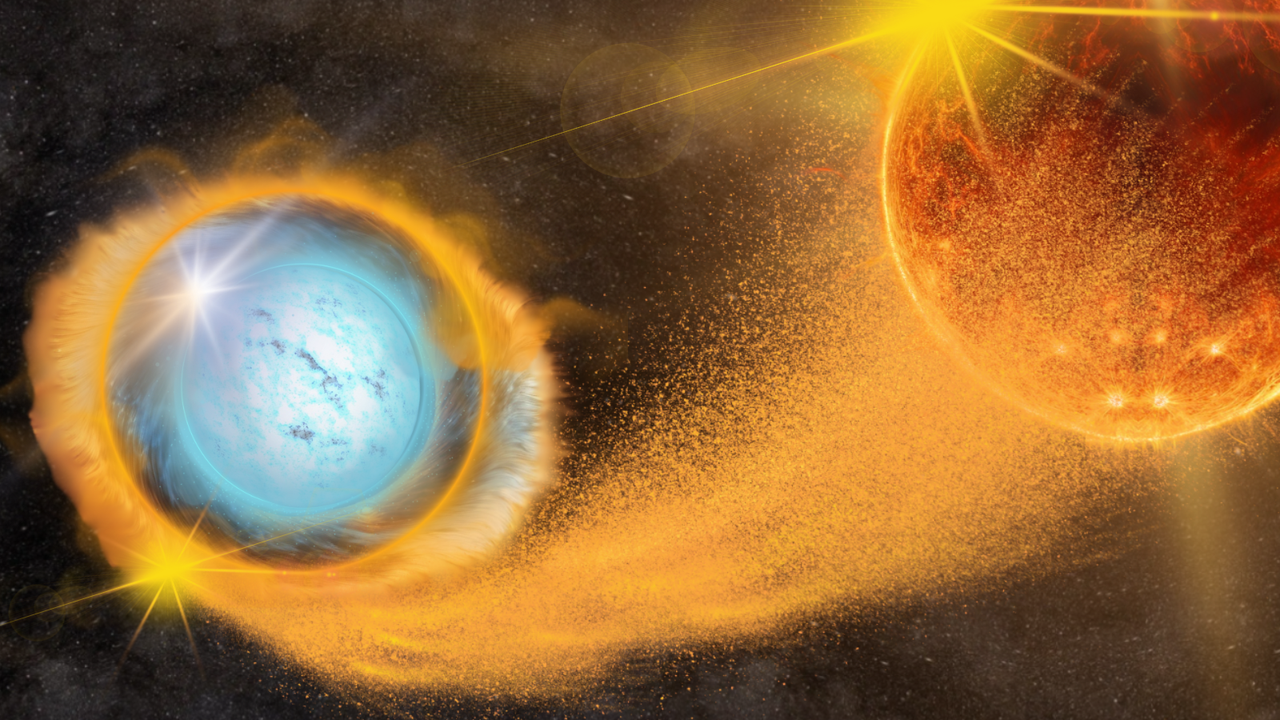
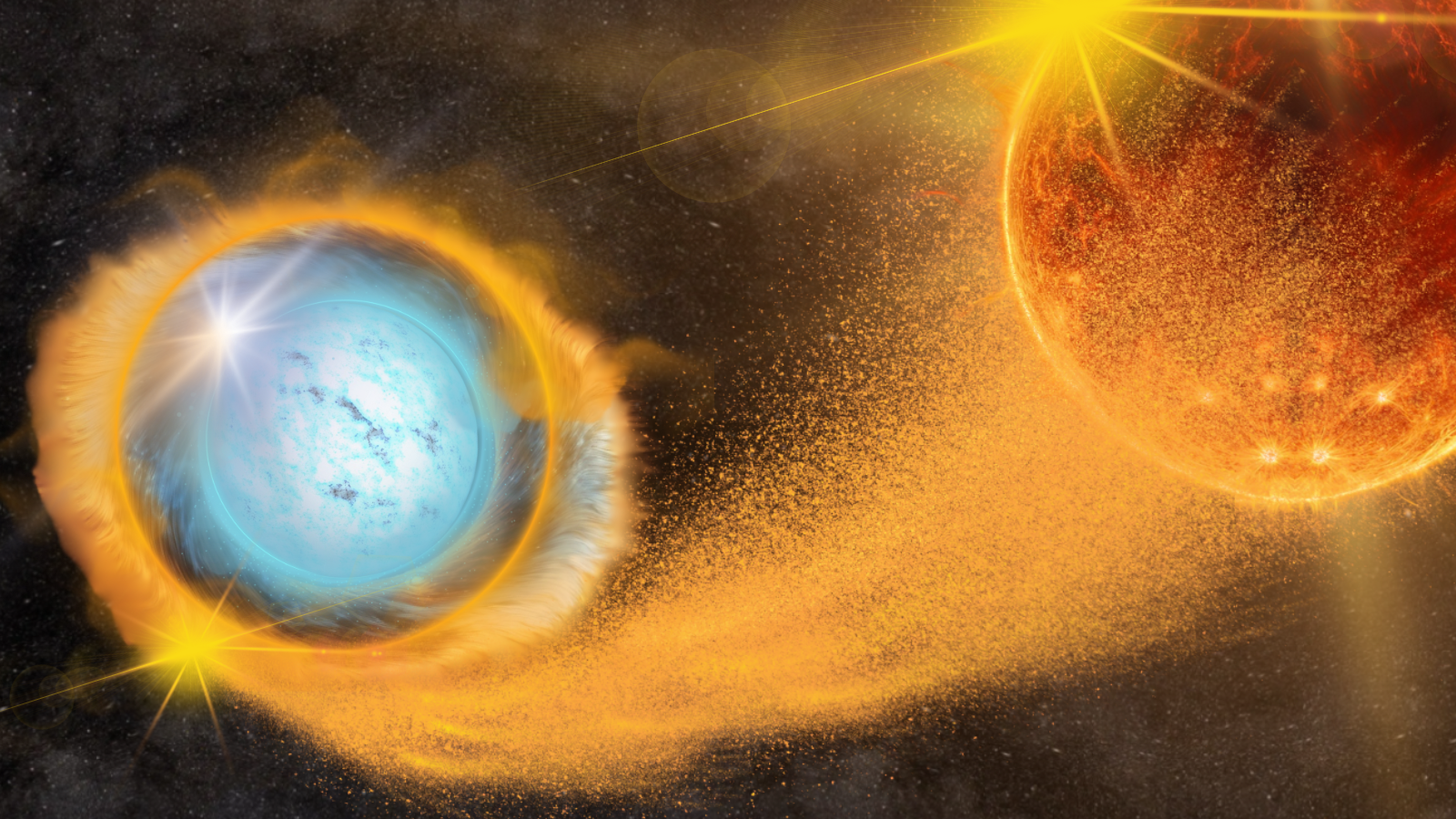
Type Ia supernovae occur when a white dwarf star in a binary system accretes matter from its companion until it triggers a thermonuclear explosion. Because these explosions happen under very similar conditions—the white dwarf reaches a critical mass (the Chandrasekhar limit)—their peak brightness is remarkably consistent. This makes them excellent 'standard candles': if you know how bright a supernova should be, and you measure how bright it appears from Earth, you can calculate its distance. This method was key to discovering dark energy. However, not all Type Ia supernovae are perfectly uniform; subtle variations exist, which can introduce uncertainties in distance measurements.
What are 'cannibal stars,' and how do they relate to Type Ia supernovae?
'Cannibal stars' is a vivid term for the process in binary systems where a white dwarf gravitationally pulls material from its companion star—effectively 'cannibalizing' it. This accretion of hydrogen and helium gradually increases the white dwarf's mass. Once it reaches about 1.4 times the mass of the Sun (the Chandrasekhar limit), the star can no longer support itself, triggering a catastrophic thermonuclear explosion—a Type Ia supernova. Some supernovae may also come from the merging of two white dwarfs, a more dramatic form of cannibalism. Understanding these progenitor pathways is crucial for refining the standard candle calibration and reducing systematic errors in dark energy studies.
How will the Rubin Observatory contribute to dark energy research?
The Vera C. Rubin Observatory, currently under construction in Chile, is designed to conduct the Legacy Survey of Space and Time (LSST). Over a decade, it will repeatedly image the entire visible sky, generating a colossal dataset of billions of galaxies and millions of supernovae. This massive survey will provide an unprecedented number of Type Ia supernovae—thousands of times more than current samples. By studying these in detail, astronomers can measure cosmic expansion with far greater precision. Moreover, the Rubin Observatory's wide-field, deep imaging will also catch rare or unexpected events—the 'unknown unknowns'—that might point to new physics beyond the standard cosmological model.
What role does artificial intelligence play in this new approach?
Artificial intelligence is essential for handling the torrent of data from the Rubin Observatory. With up to 10 million alerts per night, humans cannot manually analyze every event. Machine learning algorithms will quickly classify supernovae, separate Type Ia from other explosions, and identify anomalies that could signal something entirely new—the 'unknown unknowns.' AI can also model the subtle variations in supernova brightness due to different progenitor scenarios (like cannibal star systems), helping to correct the standard candle calibration. By combining AI with Rubin data, scientists can search for patterns that reveal missing ingredients in our cosmic recipe, potentially leading to a breakthrough in understanding dark energy.
What are 'unknown unknowns,' and why are they important in this context?
'Unknown unknowns' are things we don't even know we don't know—unexpected phenomena that fall outside our current theoretical framework. In cosmology, these could be new types of explosions, exotic interactions between dark energy and matter, or previously unseen structures. Traditional surveys are biased toward finding what we expect, but the Rubin Observatory's sheer volume and AI's pattern-recognition capabilities increase the chance of stumbling upon anomalies. For example, a slight deviation in the standard candle behavior of Type Ia supernovae might hint at a time-varying dark energy or a modification to gravity. Hunting for these 'unknown unknowns' is a bold strategy to avoid missing the very clues that could solve the dark energy puzzle.
Related Articles
- MIT Engineers 3D Print 'Y-Zipper' That Transforms Floppy Structures Into Rigid Beams in Seconds — A 40-Year-Old Concept Finally Realized
- The Sudden Spike: Why Illinois Gas Prices Now Lead the Nation Outside the West Coast
- How to Connect Claude to Your Obsidian Vault and Banish Broken Wikilinks
- Inside Tesla's $573M Web: How Elon Musk's Companies Trade with Each Other
- The Exodus of Educators: Unpacking the Reasons Behind the Growing Teacher Shortage
- Spain's Push for Synthetic Aviation Fuel: A New Path Amid Oil Volatility
- The Explosive Power of Evaporating Droplets: New Frontiers in 3D Printing and Chemical Analysis
- Lyra Project Management: Lifetime Access for 10 Users – Everything You Need to Know