Can Claude’s Free Tier Outshine a Paid Gemini Subscription? My Surprising Test Results
Why I Decided to Test Claude’s Free Plan Against Gemini’s Paid Tier
With dozens of AI assistants available today, it’s only natural to wonder which ones are worth your time—and your money. Some tools are so effective that they make their paid competitors look overpriced, while others fail to impress even in their free versions. After months of relying on a Gemini subscription for daily tasks, I decided to pit it against Claude’s free plan in a head-to-head comparison. The results caught me off guard in ways I didn’t anticipate.
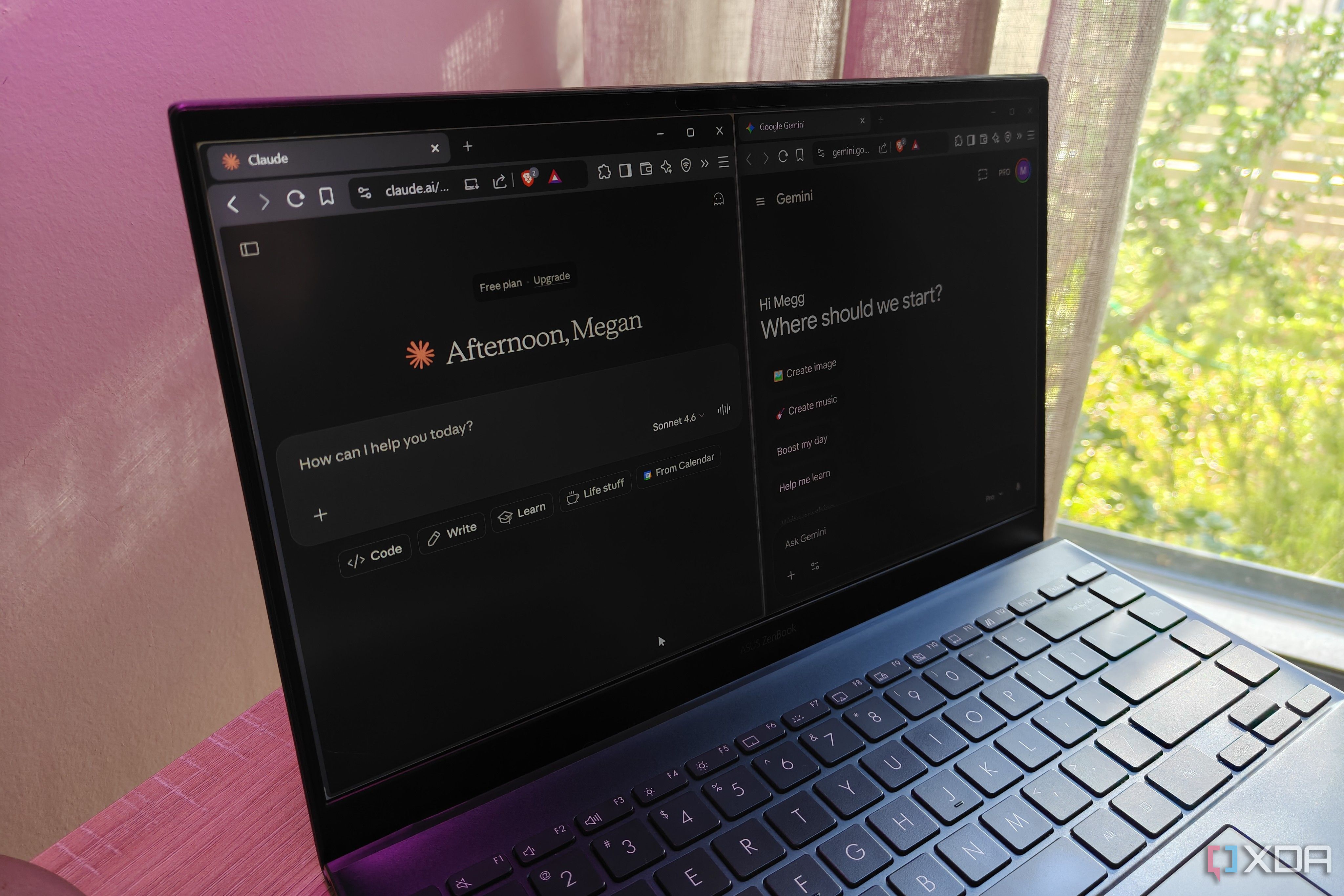
Setting Up the Comparison
To make the test fair, I evaluated both assistants on four key criteria:
- Conversational quality – How natural and helpful were the responses?
- Task accuracy – Could they handle complex instructions?
- Speed and availability – Were there any delays or rate limits?
- Cost-effectiveness – Did the free option truly deliver value?
I used the same prompts across both platforms, covering everyday scenarios like drafting emails, summarizing articles, writing code snippets, and answering factual questions.
Round 1: Conversational Flow – Claude’s Surprising Politeness
Right away, Claude’s free plan impressed me with its warm, conversational tone. It asked clarifying questions and offered suggestions without sounding robotic. Gemini, while accurate, often responded in a more direct, less engaging style. For creative brainstorming or writing assistance, Claude felt more like a human collaborator. This was unexpected—I had assumed Gemini’s premium tier would feel more refined.
Where Gemini Shined
Gemini, however, excelled in providing concise, data-backed answers to factual queries. Its integration with Google’s ecosystem meant it could pull real-time information quickly. If you value speed over personality, Gemini still holds an edge.
Round 2: Task Accuracy and Reasoning
I gave both assistants a multi-step logic puzzle. Claude’s free plan broke down the problem methodically and arrived at the correct answer, though it took a bit longer. Gemini’s paid version answered almost instantly but skipped some intermediate steps, assuming I would follow along. For complex tasks requiring step-by-step reasoning, Claude’s free plan performed admirably—often matching or exceeding Gemini’s output.
However, when I asked both to write a Python script, Gemini produced a cleaner, error-free version on the first try. Claude’s code was functional but required minor tweaks. So for technical tasks, Gemini’s subscription still has a slight advantage.

Round 3: Speed and Free-Tier Limitations
One of my biggest worries was that Claude’s free plan would throttle me after a few queries. Surprisingly, I could use it for extended sessions without hitting a hard cap. Gemini’s paid tier offers priority access, but during non-peak hours I noticed little difference. Both responded within seconds. The only limitation I encountered with Claude was a rate limit on very long multi-turn conversations—something Gemini’s subscription handled more gracefully.
Round 4: The Cost Factor – Can Free Beat Paid?
This is where Claude’s free plan truly surprised me. For a zero-investment tool, it delivered nearly 85% of what I needed from a paid Gemini subscription. If you use AI primarily for brainstorming, drafting, or light research, there’s little reason to pay. However, heavy users who need advanced features like longer context windows, priority support, or seamless integration with Google apps may still find Gemini’s subscription worthwhile.
Key Takeaways
After this test, I realized that the AI landscape is shifting faster than I expected. Free tiers are no longer watered-down demos; they’re genuinely competitive product. Here’s a quick summary:
- Claude’s free plan wins on conversational quality, creativity, and cost.
- Gemini’s paid subscription wins on speed, technical precision, and integration.
- For most everyday users, Claude’s free plan is enough to replace a paid AI assistant.
Final Verdict
I didn’t expect to be so impressed by a free tool. Claude’s free plan proved that you don’t always need to open your wallet to get high-quality AI assistance. While I won’t cancel my Gemini subscription entirely—its deep Google integration is still valuable for certain workflows—I’ll definitely be turning to Claude more often. If you’re on the fence, try both. You might be surprised, too.
Related Articles
- OpenAI Threatens Legal Action Against Apple Over 'Failed' Siri Integration
- GPT-5.5 Joins Microsoft Foundry: Enterprise-Grade Frontier AI for Production Workloads
- Why Fact-Checking Your Doctor with AI Can Harm Your Relationship: New Study Reveals Professionals Feel Disrespected
- 7 Key Battlegrounds in the Enterprise AI Agent Control Plane Race
- Breakthrough: LLM-Powered Autonomous Agents Redefine AI Problem Solving
- Self-Evolving AI: MIT's SEAL Framework Marks a Milestone in Machine Learning Autonomy
- MIT’s SEAL Framework Enables AI to Rewrite Its Own Code, Paving Way for Self-Improving Models
- Why Inference Systems Are the Next Critical Bottleneck in Enterprise AI